
Best Time to Do Yoga According to Nature’s Rhythms
Introduction
Yoga is a versatile practice that offers numerous physical, mental, and emotional benefits, regardless of the time of day you choose to practice. However, understanding the best time to do yoga according to your body’s natural rhythms can help you experience these benefits more deeply. Whether you prefer a calm sunrise session, a mindful afternoon stretch, or a relaxing evening flow, each time of day supports the body and mind in different ways.
The best time to practice yoga often depends on your lifestyle, energy levels, and personal wellness goals. Morning yoga can help awaken the body, improve focus, and create a positive start to the day, while evening yoga may support relaxation, stress relief, and better sleep. By paying attention to your natural yoga timing, you can build a practice that feels balanced, sustainable, and enjoyable.
Many people wonder when to do yoga for the greatest benefits, but there is no single answer that works for everyone. The best yoga time is ultimately the one that fits naturally into your schedule and allows you to practice consistently. Inspired by the concept of yoga according to nature, aligning your yoga practice with the body’s internal clock and the rhythms of the day can help create greater harmony between mind and body.
Whether you are creating a peaceful home yoga routine, exploring beginner-friendly practices, or building a long-term yoga daily routine, understanding how different times of the day affect your energy and mood can help you choose the practice that supports your overall well-being.
Morning Yoga
Morning yoga is one of the most refreshing ways to begin the day and is often considered the best time to do yoga for people who want to feel energized, focused, and mentally balanced. Practicing yoga in the early morning helps awaken the body gently while creating a calm and mindful start before the distractions of daily life begin. According to natural body rhythms, morning is an ideal time to connect the breath, body, and mind through movement.
For many people, the best time to practice yoga is during the early morning hours because the mind tends to be quieter and the environment is usually more peaceful. A consistent morning practice can become an important part of a healthy yoga daily routine, helping improve concentration, posture, flexibility, and emotional well-being throughout the day.
Benefits of Morning Yoga
- Energizes the body and mind naturally
- Boosts focus, clarity, and productivity
- Sets a positive and mindful tone for the day
- Stimulates metabolism and digestion
- Helps improve flexibility and circulation
- Encourages consistency in a home yoga routine
- Creates a calm environment with fewer distractions
Challenges of Morning Yoga
While morning yoga has many benefits, the body may feel stiff or tight after waking up. Muscles and joints usually need a gentle warm-up before moving into deeper stretches or stronger poses. Starting slowly and focusing on the breath can help the body adjust comfortably to morning movement.
Ideal Poses for Morning Yoga Practice
These beginner-friendly poses are excellent for morning yoga timing and help gently awaken the body:
- Gentle warm-up stretches
- Cat-Cow Pose
- Balasana (Child’s Pose)
- Surya Namaskar (Sun Salutation)
- Virabhadrasana I, II, and III
- Paschimottanasana (Seated Forward Bend)
- Savasana (Corpse Pose)
Including these poses in your morning practice can help you align your body and mind with the natural flow of the day while building a balanced and sustainable yoga habit.
Afternoon Yoga
Afternoon yoga can be a great way to recharge the body and mind during a busy day. Many people experience low energy, mental fatigue, or physical stiffness after long hours of sitting or working, and a short yoga session in the afternoon can help restore balance and improve productivity. Since the body is naturally warmer and more flexible later in the day, afternoon is often considered a comfortable yoga timing for deeper stretches, balance poses, and strength-building movements.
For those with demanding schedules, afternoon sessions can become a refreshing part of a healthy yoga daily routine. Practicing yoga during this time may help release built-up stress, improve posture, and increase mental clarity for the rest of the day. While the best time to do yoga varies from person to person, afternoon yoga works especially well for individuals looking to break up their workday and reenergize naturally.
Benefits of Afternoon Yoga
- Helps reduce physical and mental fatigue caused by work
- Restores energy and focus for the remaining day
- Improves physical stability, flexibility, and endurance
- Supports better posture after long periods of sitting
- Encourages mindfulness and stress relief during busy schedules
- Allows the body to move more freely because muscles are already warm
Challenges of Afternoon Yoga
Although afternoon yoga has many benefits, it can sometimes be difficult to fit into a busy work schedule. Creating a peaceful environment for practice may also be challenging during daytime hours. Additionally, it is important to maintain a gap of at least 30–40 minutes after eating before practicing yoga to avoid discomfort.
Ideal Poses for Afternoon Yoga
Including these poses in your afternoon practice can help refresh both body and mind while supporting a balanced and sustainable home yoga routine.
These poses help refresh the body, improve circulation, and increase energy levels during the afternoon:
- Adho Mukha Svanasana (Downward-Facing Dog)
- Urdhva Mukha Svanasana (Upward-Facing Dog)
- Trikonasana (Triangle Pose)
- Extended Side Angle Pose
- Baddha Konasana (Bound Angle Pose)
- Vrikshasana (Tree Pose)
- Ardha Chandrasana (Half-Moon Pose)
- Viparita Karani (Legs-Up-the-Wall Pose)
Evening Yoga
In today’s fast-paced and stressful lifestyle, many people spend the entire day working, sitting for long hours, or managing daily responsibilities, which can leave both the body and mind feeling exhausted. In such situations, evening yoga can be a wonderful way to relax, release tension, and reconnect with yourself after a busy day. For people looking to unwind and restore balance, evening may feel like the best time to do yoga because the body is naturally warmer and more flexible during this part of the day.
Practicing yoga in the evening helps slow down the mind, reduce stress, and prepare the body for restful sleep. Unlike energizing morning sessions, evening yoga focuses more on relaxation, mindful breathing, and gentle stretches that calm the nervous system. As part of a healthy yoga daily routine, evening practice can support emotional balance, improve flexibility, and help transition smoothly from work mode into rest and recovery.
For many individuals, the best time to practice yoga depends on when they can be most consistent and relaxed. Evening yoga works especially well for people who struggle to find time in the morning or want a peaceful home yoga routine after work. Following natural yoga timing and listening to your body’s energy levels can help create a more sustainable and enjoyable yoga habit.
Benefits of Evening Yoga
- Acts as a natural stress reliever after a busy day
- Promotes relaxation and mental calmness
- Helps reduce muscle tension and body stiffness
- Improves sleep quality and supports better rest
- Allows deeper stretches because the body is warm and flexible
- Encourages mindfulness and emotional balance
Challenges of Evening Yoga
One common challenge of evening yoga is lower energy levels after a long and tiring day. It may also feel difficult to stay consistent with practice, especially when schedules become busy. However, even a short and gentle yoga session can provide noticeable mental and physical benefits.
Ideal Poses for Evening Yoga
Adding these poses to your evening practice can help calm the mind, relax the body, and create a peaceful end to the day while supporting a balanced approach to yoga according to nature.
These calming poses are ideal for relaxing the body and mind during evening practice:
- Gentle stretching exercises
- Cat-Cow Pose
- Uttanasana (Standing Forward Bend)
- Hip Openers like Pigeon Pose
- Malasana (Garland Pose)
- Marichyasana (Seated Twist)
- Supta Baddha Konasana (Reclining Bound Angle Pose)
- Balasana (Child’s Pose)
- Savasana (Corpse Pose)
Bedtime Yoga
If you often struggle with stress, restless thoughts, or difficulty falling asleep, practicing yoga before bed can be a gentle and effective way to relax the body and calm the mind. Bedtime yoga focuses on slow movements, deep breathing, and restorative poses that help the nervous system shift into a state of rest. For people looking to improve sleep and unwind peacefully, nighttime may feel like the best time to do yoga.
Unlike more active daytime sessions, bedtime yoga is designed to release tension from the body while creating mental stillness before sleep. Following a calming nighttime practice can support a healthier sleep cycle and help you disconnect from the stress of daily life. As part of a balanced yoga daily routine, bedtime yoga encourages mindfulness, emotional relaxation, and deeper rest.
Many people wonder when to do yoga for better sleep and stress relief, and gentle nighttime practice can be especially beneficial for those with busy schedules or racing thoughts at the end of the day. The best time to practice yoga is ultimately when it supports your physical and emotional needs, and bedtime yoga can become a peaceful addition to a relaxing home yoga routine inspired by natural body rhythms.
Benefits of Bedtime Yoga
- Promotes relaxation and mental calmness
- Helps reduce stress and anxiety before sleep
- Supports better sleep quality and relaxation
- May help reduce insomnia and restless thoughts
- Encourages deep breathing and mindfulness
- Signals the body to wind down naturally
Challenges of Bedtime Yoga
One important challenge of bedtime yoga is avoiding vigorous or highly energizing poses before sleep. Intense movements can overstimulate the body and make it harder to relax. Bedtime sessions should remain slow, gentle, and calming to support restful sleep.
Ideal Poses for Bedtime Yoga
Including these calming poses in your bedtime practice can help quiet the mind, release physical tension, and support a peaceful night’s sleep while following the principles of yoga according to nature.
These soothing poses are ideal for calming the body and mind before bedtime:
- Cat-Cow Pose
- Balasana (Child’s Pose)
- Paschimottanasana (Seated Forward Bend)
- Uttanasana (Standing Forward Bend)
- Viparita Karani (Legs-Up-the-Wall Pose)
- Supta Baddha Konasana (Reclining Bound Angle Pose)
- Savasana (Corpse Pose) with deep breathing
Conclusion
In conclusion, there is no single answer to the best time to do yoga because every person’s lifestyle, energy levels, and body rhythms are different. Each part of the day offers unique physical and mental benefits, allowing you to choose a practice that fits naturally into your schedule and supports your overall well-being.
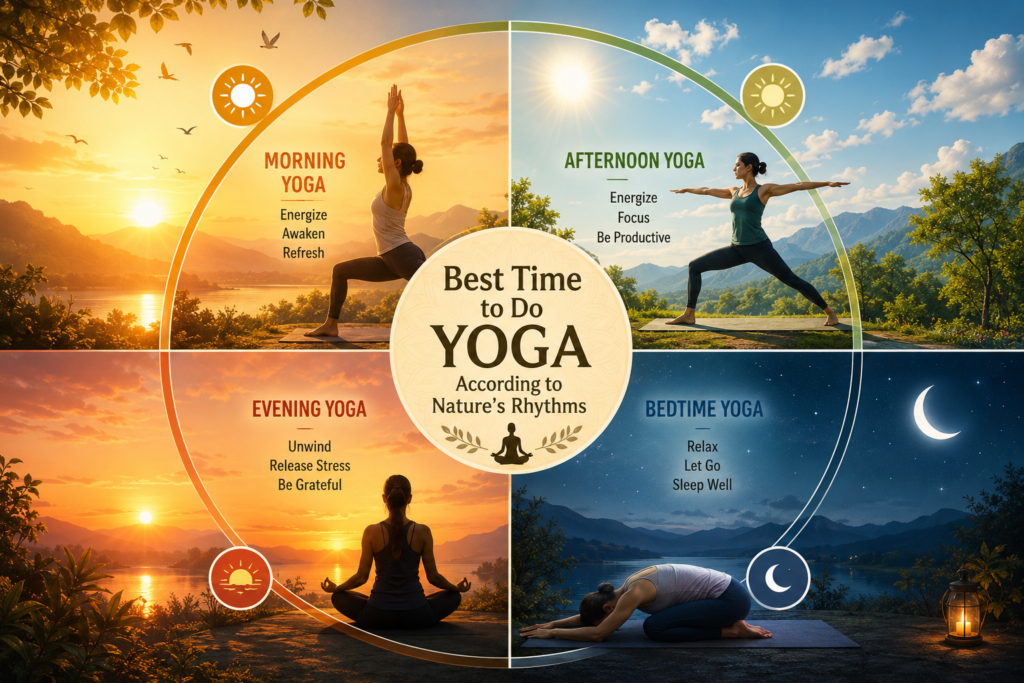
Morning yoga can help energize the body, improve focus, and create a positive start to the day. Afternoon yoga provides renewed enthusiasm and mental clarity, helping reduce work fatigue and improve concentration. Evening yoga supports relaxation and stress relief after a busy day, while bedtime yoga helps calm the mind and prepare the body for deep, restful sleep.
The best time to practice yoga is ultimately the time that feels most comfortable and sustainable for you. By understanding your natural yoga timing and listening to your body’s needs, you can build a balanced yoga daily routine that supports both physical health and emotional well-being.
Whether you prefer an energizing sunrise flow or a calming nighttime stretch, practicing yoga according to nature encourages harmony between your body, mind, and daily rhythm. Stay flexible with your schedule, enjoy the process, and create a consistent home yoga routine that works best for your lifestyle.