
Yogic Lifestyle: Take Yoga Beyond the Mat
Introduction
A yogic lifestyle is more than just practicing yoga poses on the mat—it is a holistic way of living that brings balance to the body, mind, and spirit. By applying yoga in daily life, people can improve physical health, reduce stress, develop mindful living habits, and achieve overall well-being naturally.
Yoga is an ancient Indian discipline deeply rooted in sacred texts like the Rigveda and the Bhagavad Gita. Gifted by sages, yoga was designed to promote mental peace, emotional balance, spiritual growth, and a healthy lifestyle.
The great sage Patanjali systematized yoga in the Yoga Sutras of Patanjali, introducing the concept of Ashtanga Yoga—a complete guide to meaningful and conscious living.
Today, yoga has evolved beyond physical exercise and is widely accepted as a complete wellness practice. A yogic lifestyle encourages healthy habits, self-awareness, stress management, and inner harmony, helping people live a calmer and more balanced life.
👉 In this article, you’ll learn:
- What a yogic lifestyle truly means
- The ancient roots and principles of yoga philosophy
- Practical ways to apply yoga in daily life
- Simple habits for mindful and healthy living
- How yoga helps reduce stress and improve mental wellness
What is a Yogic Lifestyle?
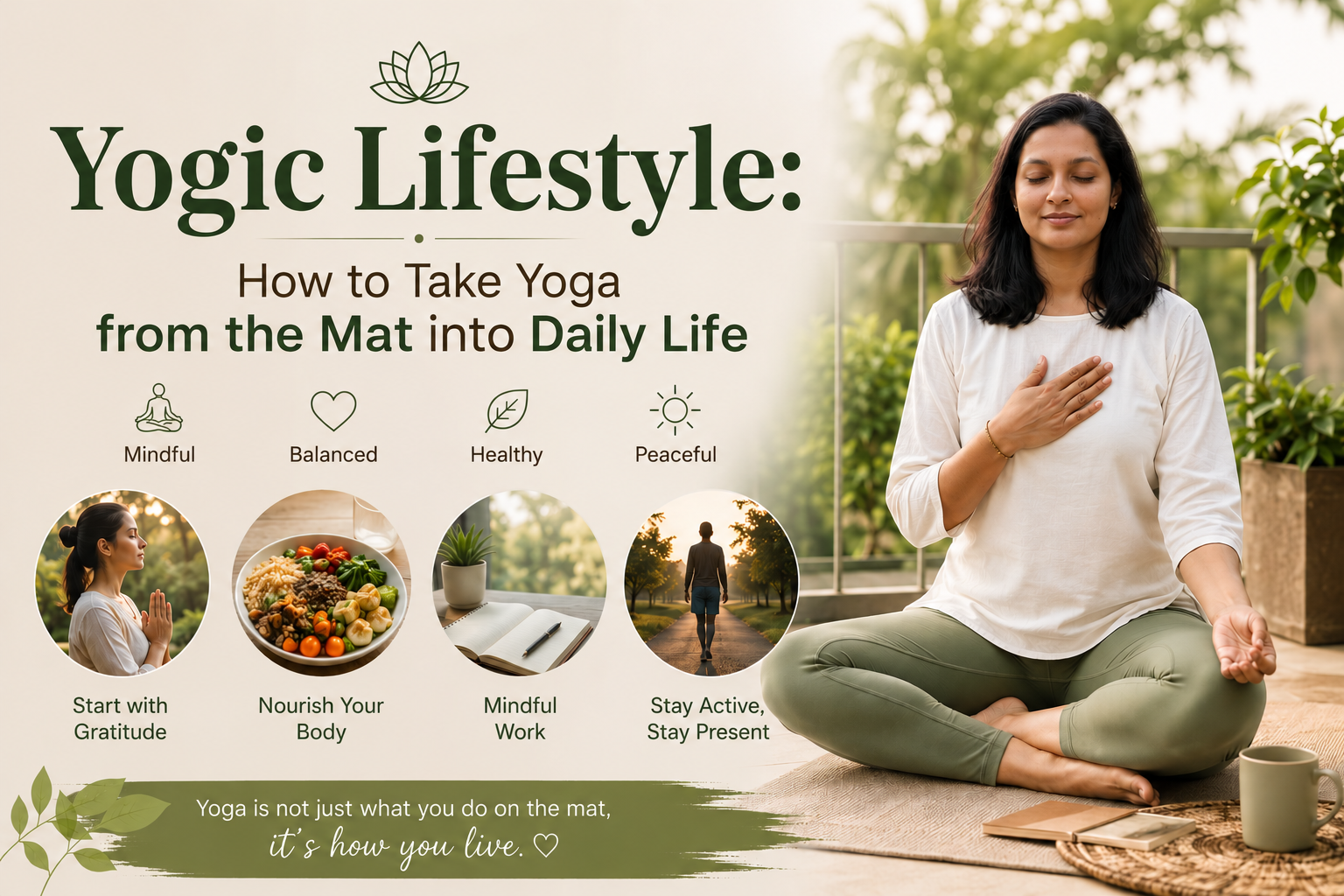
A yogic lifestyle is not limited to performing asanas on a mat. It is a way of living that integrates physical, mental, emotional, and spiritual well-being.
It includes:
- Mindful living
- Balanced diet
- Breath control
- Self-discipline
- Inner awareness
👉 In simple words:
Yoga is not something you do—it is something you live.
Ancient Roots of the Yogic Lifestyle
Yoga in the Vedic Era and Ancient Yogic Lifestyle
The origins of yoga date back to the Vedic period (1500–500 BCE). Texts like the Rigveda highlight meditation, mantra chanting, and spiritual practices.
Ancient yogis focused on self-realization and awakening higher consciousness.
Yoga in the Upanishads and Yoga Philosophy
The Upanishads expanded yogic knowledge by emphasizing:
- Meditation
- Pranayama
- Self-discipline
They describe the union of Atman (soul) with Brahman (universal consciousness).
Teachings of Yoga in the Bhagavad Gita for Daily Life
The Bhagavad Gita presents yoga as a complete lifestyle.
It explains three paths:
- Karma Yoga – Selfless action
- Bhakti Yoga – Devotion
- Jnana Yoga – Knowledge
According to Patanjali, yoga includes eight steps:
- Yama (Ethics)
- Niyama (Discipline)
- Asana (Posture)
- Pranayama (Breathing)
- Pratyahara (Sense withdrawal)
- Dharana (Focus)
- Dhyana (Meditation)
- Samadhi (Enlightenment)
👉 These form the foundation of a true yogic lifestyle.
Why Yogic Lifestyle is Important Today
Modern life is fast, stressful, and digitally overwhelming.
A yogic lifestyle helps to:
- Reduce stress and anxiety
- Improve focus and productivity
- Build emotional balance
- Enhance overall health
It brings balance in a chaotic world.
Core Elements of a Yogic Lifestyle
Asanas (Yoga Postures) for Physical Health and Flexibility
Asanas, or yoga postures, are an essential part of a yogic lifestyle that help improve flexibility, physical strength, body posture, and overall physical health. Regular yoga practice also supports internal balance, boosts energy flow, enhances body awareness, and promotes holistic well-being. By practicing yoga in daily life, individuals can maintain better fitness, reduce stress, and create harmony between the body and mind.
Pranayama Breathing Techniques for Mental Peace and Stress Relief
Pranayama is a powerful yogic breathing technique that creates a deep connection between the breath and the mind. In a yogic lifestyle, regular pranayama practice helps calm the nervous system, improve mental peace, and support emotional balance. These breathing exercises are widely practiced for stress relief, mindfulness, and overall mental wellness.
Benefits of Pranayama
- Helps reduce stress and anxiety naturally
- Improves concentration and mental clarity
- Boosts lung capacity and breathing efficiency
- Enhances relaxation and inner calm
- Supports mindful living and emotional well-being
👉 Simple truth: When you learn to control your breath, you begin to control your mind and emotions more effectively.
Meditation Practices for Inner Peace and Mental Wellness
Meditation is an important practice in a yogic lifestyle that helps improve self-awareness, mental clarity, emotional balance, and inner peace. Regular meditation practice calms the mind, reduces stress, and supports overall mental wellness, making it easier to handle daily challenges with focus and positivity.
Popular Types of Meditation
- Vipassana Meditation for mindfulness and self-awareness
- Mantra Meditation for concentration and mental relaxation
Meditation also helps improve decision-making skills, emotional stability, focus, and mindful living by creating a deeper connection between the mind and inner self.
👉 A calm mind leads to better clarity, balanced emotions, and a more peaceful life.
Sattvik Diet: Healthy Eating in a Yogic Lifestyle
A sattvik diet is an important part of a yogic lifestyle that focuses on pure, natural, and healthy eating for physical health, mental clarity, and spiritual well-being. According to the Bhagavad Gita, food directly influences the body, mind, and emotions.
Types of Food in Yoga Philosophy
- Sattvik Food – Pure, fresh, light, and vegetarian food that promotes inner peace and positive energy
- Rajasik Food – Spicy, oily, and stimulating food that increases restlessness and hyperactivity
- Tamasik Food – Heavy, processed, stale, or unhealthy food that creates laziness and mental dullness
👉 “Jaisa aahar, waisa vichar” — your food influences your thoughts, emotions, and lifestyle.
Benefits of a Sattvik Diet
- Improves energy and vitality
- Enhances mental clarity and focus
- Strengthens immunity naturally
- Supports mindful living and emotional balance
- Promotes holistic health and inner harmony
A balanced yogic diet nourishes both the body and mind, helping individuals live a healthier and more conscious life.
Self-Discipline and Niyama in Yogic Living
Self-discipline and Niyama are essential principles of a yogic lifestyle that help create consistency, inner balance, and mindful living. In yoga philosophy, practicing daily discipline improves mental clarity, emotional stability, healthy habits, and overall well-being. Small positive routines practiced regularly can transform both the body and mind.
Simple Yogic Habits for Self-Discipline
- Waking up early during Brahma Muhurta for peace and productivity
- Maintaining a daily yoga and meditation practice
- Practicing mindful eating with a healthy sattvik diet
- Following a structured daily routine for balanced living
By developing self-discipline through yogic living, individuals can reduce stress, improve focus, and build a healthier and more conscious lifestyle.
👉 Consistency in small daily habits creates long-term physical, mental, and spiritual growth.
Connection with Nature for Holistic Wellness and Inner Harmony
Connection with nature is an important part of a yogic lifestyle that promotes holistic wellness, inner harmony, and mental peace. According to ancient yoga philosophy, the human body is made of the Panchmahabhutas, or the five natural elements—earth, water, fire, air, and space. Staying connected with nature helps balance these elements and supports physical, mental, and spiritual well-being.
Simple Ways to Reconnect with Nature
- Taking peaceful morning walks in fresh air
- Practicing yoga and meditation outdoors
- Gardening to reduce stress and improve mindfulness
- Walking barefoot on grass to feel grounded and relaxed
Spending time in nature helps calm the mind, improve emotional balance, reduce stress, and create a deeper connection between the body, mind, and environment.
👉 Nature heals the body naturally and brings peace to the mind and soul.
How to Start a Yogic Lifestyle (Beginner-Friendly Tips)
Starting a yogic lifestyle does not require major changes overnight. By taking small and consistent steps, beginners can slowly bring yoga into daily life and improve their physical health, mental wellness, and overall well-being. Simple healthy habits practiced regularly can create long-term positive transformation for the body and mind.
Beginner-Friendly Tips to Start a Yogic Lifestyle
- Start with 10–15 minutes of daily yoga or meditation practice
- Practice simple pranayama breathing exercises for stress relief and mental peace
- Eat more natural, fresh, and sattvik foods for better energy and health
- Reduce screen time to improve mindfulness and mental clarity
- Stay consistent with healthy routines and mindful living habits
A balanced yogic lifestyle helps reduce stress, improve focus, increase self-awareness, and create inner harmony in everyday life.
👉 Small daily steps and consistent habits can lead to powerful physical, mental, and spiritual transformation.
Benefits of a Yogic Lifestyle
- Better physical health
- Reduced anxiety and stress
- Improved focus
- Emotional balance
- Spiritual growth
Conclusion
A yogic lifestyle is not just about fitness—it is a complete approach to life. By integrating yoga into daily routines, we can achieve health, peace, and true fulfillment.
In today’s fast-paced world, this ancient wisdom offers a powerful way to stay grounded, calm, and connected.
.
FAQs – Yogic Lifestyle
Q1. What is a yogic lifestyle?
A yogic lifestyle is a way of living that includes yoga practices, healthy diet, and mindful habits.
.Q2. How can beginners start a yogic lifestyle?
Beginners can start with simple yoga, breathing exercises, and small daily discipline.
Q3. Is yoga only physical exercise?
No, yoga is a complete lifestyle including mental, emotional, and spiritual well-being.