Easy Yoga for Beginners: 10 Simple Poses
Introduction
If you’re new to yoga and looking for a simple way to begin, these easy yoga poses for beginners can help you build flexibility, strength, balance, and mind-body awareness. Whether you want to reduce stress, improve posture, or create a healthy daily routine, practicing easy yoga regularly is a gentle and effective way to start your yoga journey.
Starting yoga may seem intimidating at first, especially if you think you need to be flexible or experienced. But the truth is, yoga is for everyone. With the right guidance and beginner-friendly movements, anyone can enjoy the benefits of easy yoga from the comfort of home. These simple poses are designed to help you move safely, breathe deeply, and feel more connected to your body.
Practicing home yoga for beginners is one of the easiest ways to create a healthy habit without needing expensive equipment or advanced skills. Just a few minutes of yoga each day can help improve posture, release body stiffness, boost energy levels, and calm the mind after a stressful day. Over time, beginner yoga can also increase flexibility, strengthen muscles, and improve overall balance and coordination.
The best part about beginner yoga is that you can move at your own pace. You don’t need to perform difficult poses or perfect every movement. Yoga is not about competition — it’s about progress, mindfulness, and feeling better in your body. Even the simplest stretches and breathing exercises can make a big difference when practiced consistently.
In this guide, you’ll discover some of the best yoga poses for beginners that are simple, effective, and easy to follow. These poses focus on building a strong foundation while helping you become more comfortable with movement and breathing techniques. Many of these are also easy beautiful yoga poses that not only feel relaxing but also improve posture, body alignment, and confidence.
Whether you want to start a morning wellness routine, practice gentle stretching after work, or simply explore a healthier lifestyle, these easy yoga poses are the perfect place to begin. Roll out your mat, take a deep breath, and enjoy the journey toward better physical and mental well-being through yoga.
Tadasana (Mountain Pose)
Tadasana, also known as Mountain Pose, is one of the most important beginner yoga poses for flexibility, balance, and posture. This easy yoga pose helps beginners build body awareness, improve stability, and create a strong foundation for other yoga postures. It is an excellent starting point for anyone practicing flexibility yoga for beginners.
Steps:
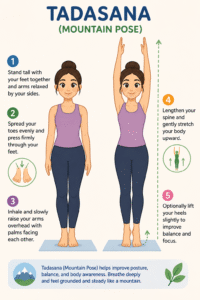 Stand tall with your feet together and arms relaxed by your sides.
- Spread your toes evenly and press firmly through your feet.
- Inhale and slowly raise your arms overhead with palms facing each other.
- Lengthen your spine and gently stretch your body upward.
- Optionally lift your heels slightly to improve balance and focus.
Breath:
- Inhale as you lift your arms and lengthen your spine.
- Exhale slowly while grounding your feet and relaxing your shoulders.
Benefits:
- Improves posture and body alignment
- Builds stability and balance
- Enhances focus and body awareness
- Strengthens legs and core muscles
- A great beginner yoga pose for flexibility and proper breathing
Avoid if:
- You experience severe dizziness or very low blood pressure
- You feel unstable while lifting your heels
Modifications for Beginners:
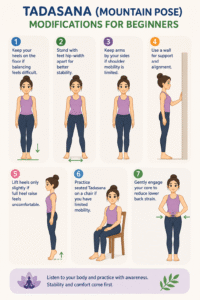 Keep your heels on the floor if balancing feels difficult
- Stand with feet hip-width apart for better stability
- Keep arms by your sides if shoulder mobility is limited
- Use a wall for support and alignment
- Lift heels only slightly if full heel raise feels uncomfortable
- Practice seated Tadasana on a chair if you have limited mobility
- Gently engage your core to reduce lower back strain
This easy yoga posture is ideal for beginners who want to improve flexibility, posture, and overall body awareness through regular yoga practice.
Vrikshasana (Tree Pose)
Vrikshasana, or Tree Pose, is one of the most effective beginner yoga poses for flexibility, balance, and concentration. This easy yoga posture helps strengthen the legs, improve posture, and develop better body awareness. It is especially beneficial for beginners who want to build stability and confidence in their yoga practice.
Steps:
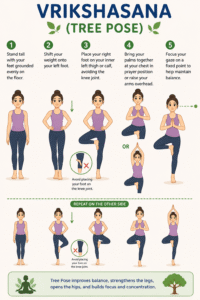 Stand tall with your feet grounded evenly on the floor.
Shift your weight onto your left foot.
- Place your right foot on your inner left thigh or calf, avoiding the knee joint.
- Bring your palms together at your chest in prayer position or raise your arms overhead.
- Focus your gaze on a fixed point to help maintain balance.
- repeat same step in right leg.
Breath:
- Inhale as you lift your arms and lengthen your spine.
- Maintain slow, calm, and steady breathing while holding the pose.
Benefits:
- Improves balance and coordination
- Strengthens legs, ankles, and core muscles
- Enhances concentration and mental focus
- Supports better posture and stability
- A helpful flexibility yoga for beginners practice to improve body control
Avoid if:
- You have severe vertigo or dizziness
- You are experiencing knee pain or balance-related issues
Modifications for Beginners:
- Place your foot on the calf or ankle instead of the thigh for easier balance
- Use a wall or chair for extra support
- Keep hands at your heart center instead of overhead if balancing feels difficult
- Try a seated variation on a chair for limited mobility
- Use a yoga block under the lifted foot if your hips feel tight
- Focus your eyes on a still point (drishti) to improve steadiness
- Engage your core and standing leg for better control and stability
Vrikshasana is a wonderful beginner-friendly yoga pose that helps develop stability, concentration, and lower-body strength while gently improving overall flexibility and posture.
Adho Mukha Svanasana (Downward-Facing Dog)
Adho Mukha Svanasana, commonly known as Downward-Facing Dog, is one of the most popular beginner yoga poses for flexibility and full-body stretching. This easy yoga posture helps lengthen the spine, strengthen the upper body, and improve overall mobility, making it a valuable pose for beginners starting their yoga journey.
Steps:
- Begin in a tabletop position with your hands under shoulders and knees under hips.
- Tuck your toes under and slowly lift your hips upward and back.
- Try to straighten your legs while pressing your heels gently toward the floor.
- Keep your head relaxed between your arms and lengthen your spine.
Breath:
- Inhale deeply to prepare your body.
- Exhale as you lift into the pose and relax your shoulders.
- Continue taking slow and steady breaths throughout the posture.
Benefits:
- Strengthens arms, shoulders, and legs
- Stretches the spine, hamstrings, and calves
- Improves posture and body alignment
- Helps increase flexibility and circulation
- A beneficial flexibility yoga for beginners pose for full-body activation
Avoid if:
- You have wrist injuries or severe shoulder pain
- You experience uncontrolled high blood pressure or glaucoma
Modifications for Beginners:
- Bend your knees slightly to reduce tension in the hamstrings and lower back.
- Place your hands on yoga blocks for extra wrist support.
- Keep your heels lifted if your calves feel tight.
- Practice using a wall or chair for a gentler variation.
- Rest your head on a yoga block or bolster for added comfort.
- Widen your hands or feet to create more stability and shoulder space.
Regular practice of Downward-Facing Dog can help beginners build strength, improve mobility, and create better posture while developing greater comfort with yoga movements.
Bhujangasana (Cobra Pose)
Bhujangasana, or Cobra Pose, is a gentle backbend that helps improve spinal flexibility, posture, and overall body awareness. This easy yoga pose is especially beneficial for beginners because it strengthens the back muscles while opening the chest and shoulders. Regular practice of Cobra Pose may also help reduce stiffness caused by long hours of sitting and support better breathing by expanding the chest area. As one of the most common beginner yoga poses for flexibility, Bhujangasana helps create a balance between strength and relaxation in the body.
Steps:
- Lie flat on your stomach with your legs extended behind you.
- Place your hands under your shoulders with elbows close to your body.
- Inhale and slowly lift your chest off the floor using your back muscles.
- Keep your shoulders relaxed and avoid straining your neck.
Breath:
- Inhale as you gently raise your chest.
- Exhale slowly as you lower back down to the mat.
Benefits:
- Strengthens the spine and back muscles
- Opens the chest and shoulders
- Helps improve posture and flexibility
- Stretches the abdomen and front body
- Supports better spinal mobility for beginners
Avoid if:
- You are pregnant
- You have severe back injuries or intense lower back pain
Modifications for Beginners:
- Keep your elbows slightly bent to avoid excess pressure on the lower back.
- Practice Baby Cobra by lifting your chest only slightly off the floor.
- Place a folded blanket under your pelvis for extra support.
- Keep your legs a little wider apart to reduce tension in the lower spine.
- Gently engage your core and glutes for better lower back stability.
- Focus on lifting with your back muscles instead of pushing strongly with your hands.
Practicing Cobra Pose regularly can help beginners feel more open through the chest, stronger in the back, and more comfortable with gentle spinal movements in yoga.
Balasana (Child’s Pose)
Balasana, also known as Child’s Pose, is a gentle resting posture that helps calm the mind and relax the body. This easy yoga pose is ideal for beginners because it softly stretches the back, hips, and thighs while encouraging deep breathing and relaxation. Often used between more active poses, Balasana helps release tension, reduce stress, and create a sense of comfort during yoga practice. It is one of the most soothing beginner yoga poses for flexibility and recovery.
Steps:
- Kneel on the mat and sit back on your heels in Vajrasana position.
- Slowly fold forward and bring your forehead toward the floor.
- Extend your arms forward or rest them beside your body.
- Relax your shoulders, neck, and hips as you settle into the pose.
Breath:
- Inhale deeply and feel the breath expand through your back body.
- Exhale slowly to release tension and relax more deeply into the posture.
Benefits:
- Calms the mind and nervous system
- Gently stretches the lower back, hips, and thighs
- Helps relieve stress and fatigue
- Encourages deep and mindful breathing
- Promotes relaxation and body awareness
Avoid if:
- You are pregnant
- You have severe knee injuries or discomfort while kneeling
Modifications for Beginners:
- Widen your knees to create more space for the hips and belly.
- Place a bolster or pillow under your torso for extra support.
- Rest your forehead on a yoga block if it does not comfortably reach the floor.
- Keep your arms beside your body to relax the shoulders more deeply.
- Use a folded blanket under your knees or ankles for cushioning.
- Try a seated forward fold variation if kneeling feels uncomfortable.
Balasana is a wonderful pose for slowing down, reconnecting with the breath, and giving the body a moment of gentle rest during any beginner yoga routine.
Sukhasana (Easy Pose)
Sukhasana, or Easy Pose, is a simple seated yoga posture commonly used for meditation, pranayama, and relaxation practices. This beginner-friendly pose encourages better posture, mindful breathing, and mental calmness. Although it looks simple, Sukhasana helps create body awareness and supports a steady, comfortable seated position for yoga and meditation. It is a great easy yoga pose for beginners who want to improve focus, breathing, and flexibility in the hips and lower back.
Steps:
- Sit comfortably on the mat with your legs crossed.
- Keep your spine tall and shoulders relaxed.
- Rest your hands on your knees or in your lap.
- Gently relax your face and jaw while maintaining an upright posture.
Breath:
- Practice slow and deep breathing through the nose.
- Focus on steady, calm breaths with full awareness.
Benefits:
- Promotes relaxation and mental calmness
- Encourages better posture and spinal alignment
- Supports meditation and breathing exercises
- Helps gently open the hips and lower back
- Improves focus and mindfulness
Avoid if:
- You experience significant hip or knee discomfort while sitting cross-legged
- Sitting on the floor causes strain or pain
Modifications for Beginners:
- Sit on a folded blanket or cushion to raise your hips above your knees.
- Use a wall for back support if sitting upright feels challenging.
- Place yoga blocks or cushions under your knees for extra comfort.
- Stretch your legs forward occasionally to reduce tightness.
- Change the crossing of your legs regularly to maintain balance in the hips.
- Practice the pose seated on a chair if floor sitting feels uncomfortable.
Sukhasana creates a peaceful foundation for meditation and breathing practices while helping beginners feel more grounded and relaxed during yoga sessions.
Setu Bandhasana (Bridge Pose)
Setu Bandhasana, commonly known as Bridge Pose, is a gentle backbend that helps improve strength, flexibility, and overall body stability. This beginner-friendly yoga pose activates the glutes, legs, and back muscles while opening the chest and shoulders. It is especially beneficial for people who spend long hours sitting, as it helps stretch the front body and reduce tension in the lower back. Bridge Pose also encourages deeper breathing and relaxation, making it a great addition to an easy yoga routine for beginners.
As one of the most effective beginner yoga poses for flexibility and posture improvement, Setu Bandhasana supports spinal mobility and helps create better body awareness. Regular practice may also help improve balance, reduce mild stress, and strengthen the muscles that support the spine.
Steps:
- Lie on your back with your knees bent and feet hip-width apart.
- Place your arms beside your body with palms facing down.
- Inhale and slowly lift your hips upward toward the ceiling.
- Keep your shoulders relaxed and press your feet firmly into the mat.
- Hold the pose for a few comfortable breaths, then exhale and slowly lower down.
Breath:
- Inhale as you lift your hips into the pose.
- Exhale slowly as you release and return to the floor.
Benefits:
- Strengthens glutes, legs, and back muscles
- Opens the chest and improves posture
- Supports spinal flexibility and mobility
- Helps calm the mind and reduce stress
- Encourages better breathing and body awareness
Avoid if:
- You have a neck injury or severe back pain
- Lifting the hips causes discomfort or strain
Modifications for Beginners:
- Place a yoga block under your sacrum for a supported Bridge Pose variation.
- Keep your feet parallel and hip-width apart to protect the knees.
- Use a folded blanket under the shoulders for neck support.
- Avoid clasping your hands underneath the body if shoulder mobility is limited.
- Lift your hips only slightly if a full lift feels uncomfortable.
- Gently engage your thighs and glutes for better stability without overstraining.
Practicing Bridge Pose regularly can help beginners develop better spinal support, improve posture, and feel more energized and relaxed after yoga practice.
Marjariasana-Bitilasana (Cat-Cow Pose)
Marjariasana-Bitilasana, commonly known as Cat-Cow Pose, is a gentle flowing movement that helps warm up the spine and improve coordination between breath and movement. This beginner-friendly yoga sequence alternates between arching and rounding the back, which helps increase spinal flexibility, release tension, and improve posture. It is often practiced at the beginning of a yoga session to prepare the body for deeper stretches and movement.
This easy yoga flow is especially beneficial for beginners because it encourages mindful breathing while gently mobilizing the neck, shoulders, and back. Regular practice of Cat-Cow Pose may also help reduce stiffness caused by sitting for long periods and support better body awareness and relaxation.
Steps:
- Come onto all fours in a tabletop position with hands under shoulders and knees under hips.
- Inhale as you drop the belly, lift the chest, and raise the tailbone into Cow Pose.
- Exhale as you round the spine, tuck the chin toward the chest, and draw the pelvis inward into Cat Pose.
- Continue flowing slowly between the two movements with your breath.
Breath:
- Inhale during Cow Pose.
- Exhale during Cat Pose.
- Match each movement smoothly with your breathing.
Benefits:
- Improves spinal flexibility and mobility
- Relieves tension in the back, neck, and shoulders
- Encourages mindful breathing and relaxation
- Helps improve posture and coordination
- Gently warms up the body before yoga practice
Avoid if:
- You have a recent back injury
- You experience significant wrist pain or discomfort
Modifications for Beginners:
- Place a blanket under the knees for extra cushioning and support.
- Keep your arms slightly bent if your elbows feel strained.
- Practice seated Cat-Cow on a chair if kneeling is uncomfortable.
- Move with a smaller range of motion if spinal mobility is limited.
- Support your wrists with a folded towel or make fists instead of placing palms flat.
- Use yoga blocks under the hands to reduce pressure on the wrists and shoulders.
Practicing Cat-Cow Pose regularly can help beginners feel more flexible through the spine, relaxed in the upper body, and more connected to their breathing during yoga practice.
Trikonasana (Triangle Pose)
Trikonasana, or Triangle Pose, is a standing yoga posture that helps improve flexibility, balance, and overall body alignment. This easy yoga pose provides a deep stretch to the legs, hips, spine, and side body while also strengthening the lower body and core muscles. It is a popular beginner yoga pose for flexibility because it helps open tight hips and hamstrings while encouraging better posture and stability.
Triangle Pose also supports mindful breathing and body awareness, making it a valuable addition to any beginner yoga routine. The twisting and stretching action in this posture may help stimulate digestion, improve circulation, and release stiffness caused by prolonged sitting or inactivity. With regular practice, Trikonasana can help beginners feel more open, balanced, and confident in standing yoga poses.
Steps:
- Stand with your feet about 3–4 feet apart.
- Turn your right foot outward and slightly turn the left foot inward.
- Inhale and extend your arms out to the sides at shoulder height.
- Exhale as you reach your right hand toward your shin, ankle, or the floor while extending the left arm upward.
- Keep your chest open and spine long as you hold the pose.
Breath:
- Inhale to prepare and lengthen the spine.
- Exhale as you move into the stretch and hold the pose steadily.
Benefits:
- Stretches legs, hips, hamstrings, and spine
- Strengthens legs and core muscles
- Improves balance and posture
- Encourages better digestion and circulation
- Helps increase flexibility and body awareness
Avoid if:
- You experience low blood pressure or dizziness
- Neck movement or deep side bending causes discomfort
Modifications for Beginners:
- Place your lower hand on a yoga block instead of the floor for better support.
- Keep a slight bend in the front knee to protect the joint.
- Shorten your stance if your hips or hamstrings feel tight.
- Rest your back heel against a wall for added stability.
- Look forward or downward if turning the head upward strains the neck.
- Use a chair seat under the lower hand for a gentler variation.
Regular practice of Triangle Pose can help beginners improve flexibility, stability, and posture while building greater confidence in standing yoga postures.
Shavasana (Corpse Pose)
Shavasana, or Corpse Pose, is a deeply relaxing yoga posture usually practiced at the end of a yoga session. Although it appears simple, this pose plays an important role in allowing the body and mind to fully rest and absorb the benefits of the practice. Shavasana helps relax the muscles, calm the nervous system, and reduce mental stress, making it one of the most essential poses in any easy yoga routine for beginners.
This restorative posture encourages complete physical and mental relaxation through stillness and natural breathing. Regular practice of Shavasana may help improve focus, reduce anxiety, ease fatigue, and promote a sense of inner calm. It is especially beneficial for beginners who want to develop mindfulness, body awareness, and healthy breathing habits during yoga practice.
Steps:
- Lie flat on your back in a comfortable position.
- Keep your arms slightly away from your body with palms facing upward.
- Relax your legs naturally and gently close your eyes.
- Release tension from the face, shoulders, and entire body.
Breath:
- Allow your breathing to remain natural and effortless.
- Observe the breath calmly without trying to control it.
Benefits:
- Promotes deep relaxation and stress relief
- Helps calm the mind and nervous system
- Reduces anxiety and physical tension
- Encourages mindfulness and body awareness
- Supports recovery after yoga practice
Avoid if:
There are no major restrictions, but try to stay mentally alert and avoid falling asleep completely.
Modifications for Beginners:
- Place a bolster or pillow under the knees to reduce lower back tension.
- Use a folded blanket under the head for neck support and comfort.
- Lie on your side if lying flat feels uncomfortable or during pregnancy.
- Cover yourself with a blanket to stay warm and relaxed.
- Practice seated on a chair with feet supported if lying down is difficult.
- Use an eye pillow or soft cloth over the eyes to encourage deeper relaxation.
Shavasana reminds beginners that relaxation is just as important as movement, helping create balance between physical activity, breathing, and mental calmness in yoga practice.
Beginner Tips for a Safe and Comfortable Yoga Practice
- Practice yoga on an empty or light stomach:
Try to practice yoga at least 2–3 hours after a heavy meal. A light stomach helps you move more comfortably and makes twisting, bending, and balancing poses easier. - Use yoga props for extra support and comfort:
Beginners can use cushions, yoga blocks, straps, or folded blankets to improve alignment, reduce strain, and make poses more accessible. Props help the body feel supported instead of forced into a posture. - Warm up before starting and cool down afterward:
Gentle stretches and simple movements before yoga prepare the muscles and joints for practice, while relaxing poses and deep breathing at the end help the body recover and relax. - Listen to your body and avoid pushing too hard:
Yoga should never cause sharp pain or discomfort. Move slowly, breathe steadily, and modify poses whenever needed. Progress in yoga comes with regular and mindful practice, not by forcing flexibility.
How often should beginners practice yoga?
Beginners can start with 15–30 minutes of yoga practice, 3–5 times a week. Consistent practice is more important than long sessions.
How long does it take to become flexible with yoga?
Flexibility improves gradually with regular practice. Many beginners notice better mobility and reduced stiffness within a few weeks of consistent yoga practice.
Is it normal to feel sore after yoga?
Mild muscle soreness can happen when starting yoga, especially if the body is not used to stretching. Rest, hydration, and gentle practice can help reduce discomfort.