
Introduction
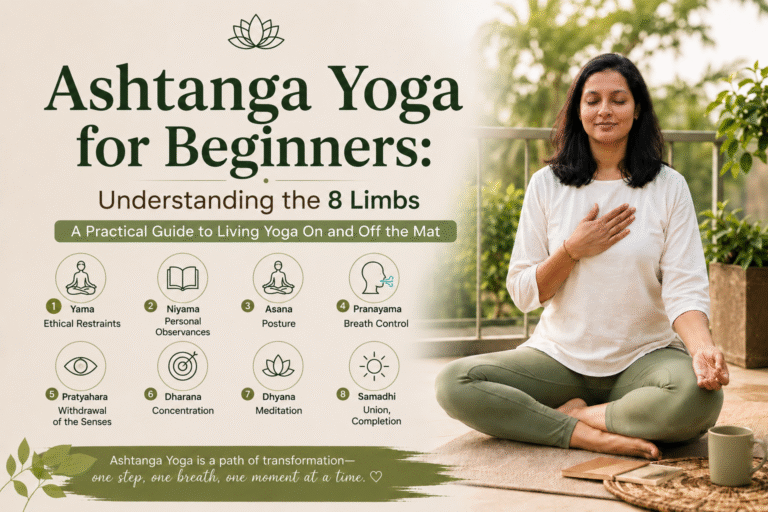
In Sanskrit, “Ashta” means eight and “Anga” means limbs, which together form the meaning of Ashtanga Yoga — the path of the eight limbs of yoga. Rooted in the ancient teachings of Patanjali, Ashtanga Yoga offers a holistic approach to achieving physical health, mental clarity, emotional balance, and overall well-being. The 8 limbs of Ashtanga Yoga serve as a practical guide for living a disciplined, mindful, and meaningful life. From ethical values and self-discipline to meditation and self-awareness, the 8 limbs by Patanjali help create harmony between the body and mind. Whether you are new to yoga or looking to deepen your practice, understanding the 8 limbs can help you experience the true essence of a balanced and mindful lifestyle.
History and Origin of Ashtanga Yoga
The history of Ashtanga Yoga is considered extremely ancient and deeply rooted in the yogic traditions of India. References to yoga can be found in ancient scriptures such as the Vedas, Upanishads, and the Bhagavad Gita. However, it was Patanjali who systematically organized the principles of yoga and presented the complete framework of Ashtanga Yoga Philosophy in a structured and practical way.
In his renowned text, Yoga Sutras of Patanjali, Patanjali explained the principles and practices of yoga in great detail. He described yoga not merely as a form of physical exercise, but as a complete discipline and lifestyle that supports personal growth, mental clarity, and self-awareness. According to Patanjali, the primary goal of yoga is to calm the restless mind, develop mental stability, and achieve a deeper understanding of oneself.
The word “Ashtanga” comes from the Sanskrit language, where “Ashta” means eight and “Anga” means limbs or steps. These 8 Limbs of Yoga form the foundation of Ashtanga Yoga, guiding individuals toward ethical living, physical discipline, breath control, concentration, meditation, and higher self-awareness.
In the modern era, the global popularity of Ashtanga Yoga is largely credited to renowned yoga teacher K. Pattabhi Jois. He introduced this traditional yogic practice to the world through the famous Mysore-style Ashtanga Yoga, which combines synchronized breathing techniques with dynamic yoga postures. Today, millions of people follow Ashtanga Yoga Philosophy to improve mental clarity, emotional balance, self-discipline, and overall well-being in daily life.
The Eight Limbs of Ashtanga Yoga
1. Yama (Moral Disciplines)
In Ashtanga Yoga Philosophy, Yama represents the first of the 8 Limbs of Yoga and focuses on ethical values and moral disciplines that guide our behavior and interactions with the world. These principles help individuals develop self-discipline, emotional balance, healthy relationships, and a mindful way of living. Yama forms the foundation of a balanced and meaningful yogic lifestyle.
Ahimsa (Non-violence)
Ahimsa means non-violence and compassion toward all living beings, including oneself. In Ashtanga Yoga, Ahimsa goes beyond avoiding physical harm—it also encourages practitioners to eliminate negative thoughts, harmful speech, anger, and destructive actions. Practicing Ahimsa helps create inner peace, kindness, and emotional harmony in daily life.
Satya (Truthfulness)
Satya refers to truthfulness and honesty in thoughts, words, and actions. This principle teaches individuals to live authentically while maintaining compassion and sensitivity toward others. In Ashtanga Yoga Philosophy, Satya encourages clear communication, integrity, and self-awareness.
Asteya (Non-stealing)
Asteya means non-stealing and respecting what belongs to others. This principle is not limited to material possessions; it also includes intellectual honesty, respecting others’ time, ideas, and efforts. Practicing Asteya helps cultivate gratitude, fairness, and ethical living.
Brahmacharya (Moderation)
Brahmacharya emphasizes moderation and balance in life. It encourages individuals to avoid overindulgence in sensory pleasures and unhealthy habits that may lead to dissatisfaction or imbalance. In the 8 Limbs of Yoga, Brahmacharya promotes self-control, mindful living, and conservation of mental and physical energy.
Aparigraha (Non-possessiveness)
Aparigraha means non-possessiveness or freedom from excessive attachment to material things. This principle teaches individuals to appreciate what they already have instead of constantly chasing more possessions or desires. Practicing Aparigraha helps reduce stress, increase gratitude, and create mental clarity and contentment.
2.Niyama (Self-Discipline)
In Ashtanga Yoga Philosophy, Niyama is the second of the 8 Limbs of Yoga and focuses on self-discipline, personal growth, and inner development. While Yama teaches ethical behavior toward others, Niyama emphasizes the practices and habits that help individuals build self-awareness, mental clarity, emotional balance, and a healthier lifestyle. These principles encourage positive daily routines and mindful living.
Saucha (Purity)
Saucha means purity and cleanliness of both the body and mind. In Ashtanga Yoga, Saucha involves maintaining external cleanliness as well as developing positive thoughts and healthy habits. Practicing Saucha helps create a peaceful environment, improves mental clarity, and supports overall well-being.
Santosha (Contentment)
Santosha refers to contentment and gratitude for what one already has in life. This principle teaches individuals to accept situations with a positive mindset rather than constantly seeking external satisfaction. In Ashtanga Yoga Philosophy, Santosha helps reduce stress, anxiety, and dissatisfaction while promoting inner happiness and emotional stability.
Tapas (Self-Discipline)
Tapas represents self-discipline, dedication, and perseverance. It encourages individuals to stay committed to their goals and maintain consistency in their yoga practice and daily life. Practicing Tapas helps build mental strength, willpower, focus, and personal growth.
Svadhyaya (Self-Study)
Svadhyaya means self-study and self-reflection. This principle encourages individuals to observe their thoughts, behaviors, and emotions through practices such as meditation, mindfulness, and the study of yogic teachings. In the 8 Limbs of Yoga, Svadhyaya helps deepen self-awareness and personal understanding.
Ishvara Pranidhana (Surrender and Trust)
Ishvara Pranidhana refers to surrender, trust, and acceptance of life’s natural flow. It teaches individuals to let go of excessive control and develop faith in the journey of life. Practicing this principle helps create mental peace, emotional balance, and a sense of calm during challenging situations
In Ashtanga Yoga Philosophy, Asana is the third of the 8 Limbs of Yoga and refers to the physical postures practiced in yoga. While many people associate yoga only with physical exercise, the purpose of Asana goes beyond improving fitness. These yoga postures help create harmony between the body and mind while preparing individuals for deeper concentration and meditation. Regular practice of Ashtanga Yoga Asanas supports both physical health and mental well-being.
Benefits of Asana in Ashtanga Yoga
- Improves Flexibility and Strength
Practicing yoga postures regularly helps improve muscle strength, joint flexibility, balance, and overall body stability. It also supports better posture and physical endurance. - Reduces Stress and Regulates Emotions
In Ashtanga Yoga, Asana practice helps calm the nervous system, reduce stress, and improve emotional balance. Mindful movement combined with breathing techniques creates a sense of relaxation and mental clarity. - Supports Detoxification and Healthy Body Functions
Various yoga postures stimulate internal organs, improve blood circulation, and support healthy digestion and overall bodily functions. This helps the body naturally remove toxins and maintain better health. - Balances Energy Flow in the Body
According to traditional yogic practices, Asana helps maintain balance in the body’s energy channels, also known as Nadis, and supports the proper flow of energy throughout the body. This balance contributes to improved focus, vitality, and overall well-being.
4. Pranayama (Breath Control)
In Ashtanga Yoga Philosophy, Pranayama is the fourth of the 8 Limbs of Yoga and focuses on breath control and the regulation of life energy through conscious breathing techniques. The word “Prana” means life force or vital energy, while “Ayama” means expansion or control. In Ashtanga Yoga, Pranayama helps create a deeper connection between the body and mind, promoting mental clarity, emotional balance, and overall well-being.
By practicing proper breathing techniques, individuals can improve both physical and mental health while developing greater awareness and concentration.
Benefits of Pranayama in Ashtanga Yoga
- Enhances Lung Capacity and Oxygen Flow
Regular practice of Pranayama improves breathing efficiency, increases oxygen supply to the body, and supports better respiratory health. - Reduces Stress and Anxiety
Conscious breathing techniques help calm the nervous system, lower stress levels, and create a sense of relaxation and inner balance. - Improves Mental Clarity and Focus
In Ashtanga Yoga, Pranayama helps sharpen concentration, improve mindfulness, and enhance mental clarity for better daily performance. - Regulates Emotions and Promotes Inner Peace
Controlled breathing supports emotional stability, reduces restlessness, and encourages a calm and peaceful state of mind.
Types of Pranayama
Nadi Shodhana
Also known as alternate nostril breathing, Nadi Shodhana helps balance the body’s energy flow and promotes mental calmness and focus.
Kapalabhati
Kapalabhati involves rapid and forceful exhalations that help cleanse the respiratory system, improve circulation, and support detoxification.
Bhastrika
Bhastrika Pranayama uses strong and rhythmic breathing patterns to energize the body, improve vitality, and increase focus.
Ujjayi
Known as ocean or whisper breathing, Ujjayi Pranayama creates slow and controlled breaths that promote relaxation and mindfulness during yoga practice.
Bhramari
Bhramari Pranayama, also called humming bee breath, involves humming during exhalation to calm the nervous system, reduce stress, and promote emotional balance.
5. Pratyahara (Withdrawal of Senses)
In Ashtanga Yoga Philosophy, Pratyahara is the fifth of the 8 Limbs of Yoga and focuses on withdrawing the senses from external distractions. In today’s fast-paced world, the mind is constantly influenced by noise, screens, social media, and external stimulation. Pratyahara teaches individuals to turn their attention inward and develop greater inner awareness and mental control.
This stage of Ashtanga Yoga acts as a bridge between the external practices of yoga and the deeper internal practices such as concentration and meditation. By learning to control sensory distractions, practitioners can create mental clarity, emotional balance, and a calmer state of mind.
Benefits of Pratyahara in Ashtanga Yoga
- Reduces Dependence on External Stimuli
Practicing Pratyahara helps individuals become less dependent on external distractions, material desires, and constant sensory stimulation. This creates a greater sense of inner peace and self-control. - Improves Focus and Concentration
By withdrawing attention from outside distractions, Pratyahara helps improve concentration, mental clarity, and mindfulness in daily life. - Develops Inner Strength and Emotional Resilience
In Ashtanga Yoga Philosophy, Pratyahara encourages emotional stability and mental discipline, helping individuals remain calm and balanced during challenging situations. - Supports Meditation and Mindfulness
Pratyahara prepares the mind for deeper meditation by calming mental distractions and increasing self-awareness. This helps practitioners experience greater mindfulness and inner balance.
6. Dharana (Concentration)
In Ashtanga Yoga Philosophy, Dharana is the sixth of the 8 Limbs of Yoga and refers to the practice of concentration and single-pointed focus. Dharana trains the mind to remain steady, calm, and free from distractions. In today’s world, where the mind is constantly scattered by multitasking and digital distractions, practicing Dharana in Ashtanga Yoga helps improve focus, mindfulness, and mental stability.
The main purpose of Dharana is to direct the mind toward one object, thought, sound, or point of attention for an extended period of time. This practice prepares the mind for deeper meditation and greater self-awareness.
One common practice related to Dharana is Trataka Kriya (Yogic Gazing), where practitioners focus their attention on a specific object such as a candle flame, the moon, or a sacred symbol. This yogic concentration technique helps strengthen mental focus and improve inner awareness.
Benefits of Dharana in Ashtanga Yoga
- Enhances Memory Power
Regular concentration practices help sharpen the mind, improve memory retention, and increase mental clarity. - Improves Mental Discipline
Dharana strengthens focus, patience, and self-control, helping individuals manage distractions more effectively in daily life. - Supports Energy Balance and Inner Awareness
According to traditional yogic practices, Dharana helps activate the body’s energy centers and promotes greater awareness, focus, and inner balance.
7. Dhyana (Meditation)
In Ashtanga Yoga Philosophy, Dhyana is the seventh of the 8 Limbs of Yoga and refers to the state of deep meditation and continuous awareness. While Dharana focuses on training the mind to concentrate on a single point, Dhyana in Ashtanga Yoga is a more natural and effortless flow of attention where the mind remains calm, steady, and fully absorbed.
In this meditative state, distractions gradually decrease, allowing individuals to experience greater mindfulness, mental clarity, emotional balance, and inner calm. Regular practice of Dhyana helps strengthen the connection between the mind and body while promoting overall well-being.
How to Practice Dhyana (Meditation)
Choose a Peaceful Environment
Select a quiet and comfortable place where you can meditate without distractions. A calm environment helps improve focus and relaxation during meditation practice.
Sit Comfortably with an Erect Spine
Maintain a comfortable seated posture with the spine straight and the body relaxed. Proper posture supports better breathing and mental alertness.
Focus on Breath, Mantra, or Visualization
In Ashtanga Yoga Meditation, practitioners may focus on their breathing, repeat a calming mantra, or visualize a peaceful image to maintain awareness and concentration.
Gently Bring Back Attention
It is natural for the mind to wander during meditation. Whenever distractions arise, gently redirect your attention back to your chosen point of focus without frustration or judgment.
Practice Regularly for Better Results
Consistent meditation practice helps improve concentration, emotional stability, mindfulness, and mental peace over time. Regular Dhyana practice can also reduce stress and enhance overall quality of life.
8. Samadhi (Absorption)
In Ashtanga Yoga Philosophy, Samadhi is the eighth and final stage of the 8 Limbs of Yoga. It represents the highest state of meditation and deep awareness, where the mind becomes completely calm and fully absorbed in the present moment. In this advanced stage of Ashtanga Yoga, individuals experience a profound sense of peace, clarity, and connection with universal consciousness.
Samadhi is considered the ultimate goal of the yogic path, where distractions, ego, and mental fluctuations gradually dissolve, allowing the practitioner to experience complete inner balance and higher awareness.
Stages of Samadhi
Savikalpa Samadhi (With Awareness)
In Savikalpa Samadhi, a subtle sense of awareness and mental activity still remains. This stage includes different levels of meditative absorption and inner experience.
Savitarka
This stage involves awareness accompanied by thoughts and logical understanding. The mind remains focused while still recognizing objects or ideas during meditation.
Savichara
In Savichara Samadhi, meditation becomes deeper and more subtle, with increased inner focus and reduced mental distractions.
Sananda
This stage is associated with deep inner joy, peace, and emotional harmony experienced during meditation.
Sasmita
In Sasmita Samadhi, only a subtle sense of self-awareness remains, while the mind becomes extremely calm and refined.
Nirvikalpa Samadhi (Complete Absorption)
Nirvikalpa Samadhi is considered the highest state of meditative awareness in Ashtanga Yoga. In this state, the practitioner moves beyond ordinary mental and physical awareness and experiences complete stillness, deep clarity, and total absorption. This stage is often associated with ultimate self-realization, profound inner peace, and a state of pure awareness.
Relevance of Ashtanga Yoga in Modern Life
In today’s fast-paced world, many people are constantly dealing with competition, pressure, stress, anxiety, and emotional imbalance. Busy schedules, unhealthy lifestyles, and excessive digital distractions have made it difficult for individuals to maintain both physical and mental well-being. In such situations, Ashtanga Yoga Philosophy offers a holistic and practical approach to creating balance, improving self-awareness, and leading a healthier lifestyle.
The principles of Ashtanga Yoga are highly relevant in modern life because they help individuals improve physical health, mental clarity, emotional stability, and overall well-being.
1. Helps Manage Stress and Anxiety
In Ashtanga Yoga, practices such as Pranayama and Dhyana (Meditation) help calm the nervous system and regulate emotions. Conscious breathing and meditation techniques reduce mental stress, anxiety, and emotional restlessness while promoting inner peace, relaxation, and mindfulness.
2. Improves Physical Health and Fitness
Modern sedentary lifestyles have increased health problems such as obesity, poor posture, diabetes, and heart-related conditions. Regular practice of Asanas in Ashtanga Yoga improves flexibility, strength, blood circulation, posture, and overall physical fitness. It also supports better energy levels and healthy body functions.
3. Enhances Focus and Mental Clarity
In a world filled with constant notifications, social media, and digital distractions, maintaining concentration has become challenging. Practices like Pratyahara and Dharana in the 8 Limbs of Yoga help improve focus, concentration, memory, and mental discipline. These practices support better productivity and clearer thinking in daily life.
4. Encourages Discipline and Ethical Living
The principles of Yama and Niyama provide guidance for ethical living, self-discipline, honesty, and self-awareness. These foundational teachings of Ashtanga Yoga Philosophy help individuals build positive habits, stronger relationships, emotional balance, and a more mindful lifestyle.
5. Promotes Inner Awareness and Life Balance
In today’s materialistic world, many people feel emotionally disconnected and mentally exhausted. Ashtanga Yoga encourages individuals to develop inner awareness, mindfulness, gratitude, and a deeper understanding of themselves. This helps create a greater sense of fulfillment, purpose, emotional strength, and overall life balance.
Conclusion
Ashtanga Yoga is much more than a series of physical postures; it is a complete lifestyle that helps create balance between the body, mind, emotions, and overall well-being. The principles of Ashtanga Yoga Philosophy guide individuals toward ethical living, self-discipline, mindfulness, mental clarity, and personal growth. By gradually practicing the 8 Limbs of Yoga in daily life, individuals can develop a healthier, more meaningful, and harmonious way of living.
In today’s stressful and fast-moving world, Ashtanga Yoga offers a timeless approach to overcoming modern challenges. From improving physical health and emotional balance to enhancing focus and self-awareness, this ancient yogic practice provides practical tools for leading a calmer and more balanced life. With regular practice and consistency, Ashtanga Yoga Philosophy can help individuals experience greater inner peace, mindfulness, confidence, and overall well-being.
What are the 8 limbs of Ashtanga Yoga for beginners?
The 8 limbs of Ashtanga Yoga are eight spiritual and practical steps described by Patanjali in the Yoga Sutras. These include Yama, Niyama, Asana, Pranayama, Pratyahara, Dharana, Dhyana, and Samadhi. Together, they help beginners develop a balanced and mindful lifestyle.
Why are the 8 limbs of Ashtanga Yoga important?
The 8 limbs of Ashtanga Yoga are important because they guide individuals toward physical health, mental clarity, emotional balance, self-discipline, and spiritual growth. They provide a complete path for overall well-being.
Is Ashtanga Yoga good for beginners?
Yes, Ashtanga Yoga is suitable for beginners when practiced gradually. Beginners can start with simple yoga postures, breathing exercises, meditation, and healthy daily habits to build a strong foundation.
What is the main goal of the 8 limbs of yoga?
The main goal of the 8 limbs of yoga is to create harmony between the body, mind, and soul. These practices help improve concentration, mindfulness, inner peace, and self-awareness.
How can beginners practice the 8 limbs of Ashtanga Yoga daily?
Beginners can practice the 8 limbs of Ashtanga Yoga daily by following ethical values, practicing yoga poses, doing pranayama, meditating regularly, and maintaining mindfulness in everyday life.
What is the difference between Ashtanga Yoga and regular yoga?
Ashtanga Yoga is a complete yogic philosophy that includes ethics, breath control, and meditation, while regular yoga classes often focus mainly on physical exercises and flexibility.
Can the 8 limbs of Ashtanga Yoga help reduce stress and anxiety?
Yes, practicing the 8 limbs of Ashtanga Yoga can help reduce stress, anxiety, and mental distractions. Meditation, pranayama, and mindfulness practices promote emotional stability and inner calm.